Skip to product information
1 of 6

The Mayan Wisdom Project

Red Fajas

Red Fajas

Regular price $26.00 USD
Regular price Sale price $26.00 USD
Sale Sold out
Tax included. Shipping calculated at checkout.

The Red Faja: The Traditional Maya Sash for Protecting Your Energy

SOLD OUT, but we are taking PREORDERS now to ship out within 4 weeks

Worn for generations by Maya Elders and spiritual leaders, now yours to wear for healing work, ceremony, and any space where you give your energy to others.

✓ Traditional red faja, worn at the waist and belly
✓ Made for energy workers, healers, and people who generally sit in circles
✓ Handwoven by Maya women in the Kaqchikel Nation 
✓ Red, the color of protection across Guatemala

Only available in the US for now

If you work with or around people, you already know this feeling

You spend an hour with a patiend, or sit in a circle, or enter a crowded ceremony, or join a retrat and when you walk out, something can sometimes feel different. Heavier, scattered, not quite yours.

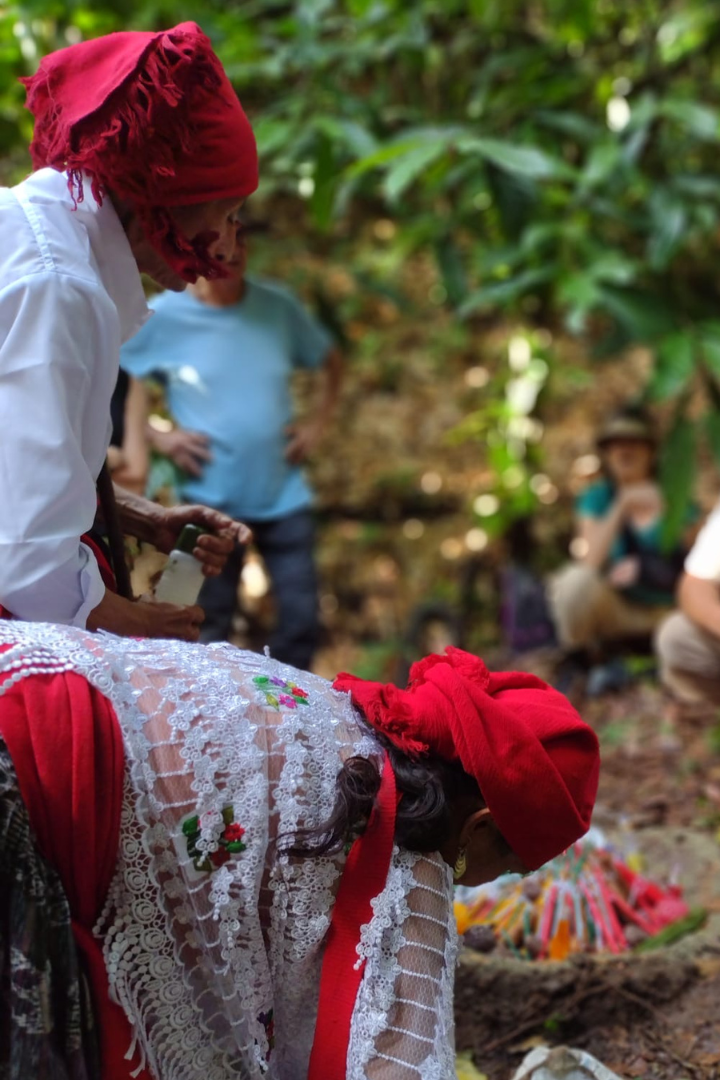
Spiritual leaders in the Maya tradition have known this for a very long time. And they didn’t ignore it, they prepared for it, and one of the ways they did was by wearing a traditional red faja.

mayan-wisdom-project-journey-healing.png__PID:088d2627-c3d5-4857-bbcb-03182ab0bd31

What is a faja?

A faja is a long woven sash, wrapped around the waist at the height of the belly button. It’s one of the oldest garments of the Maya world. Maya men and women wear one as part of traditional dress. It’s one of the few Indigenous garments that Maya men have kept wearing into the present, even after most adopted Western clothing. And even today, many men and women still wear a faja both everyday and during ritual activities, woven on a backstrap loom.

It isn’t a fashion accessory. It’s a tool, and it has been for a very long time. It is used to protect your belly button, which by the Maya is considered to be one of the most important energy points in the body. Covering it, keeps you energetically protected from the energy of those around you.

mayan-wisdom-journey-guatemala.png__PID:e7068cfd-ffea-4b07-9ab2-3dbff2fd0601

Why red?

Red is the color of protection across Guatemala, far beyond the faja. Families tie red ribbons in girls’ hair to guard them from evil and bad energy. Traditional healers use a red handkerchief in cleansing rituals, and give red necklaces and bracelets as protective amulets after a cleansing. Some families even surround a child’s bed with a red cloth. 

So when you wear a red faja, you’re wearing a color that people here have trusted for generations.

Mal de ojo, and why people protect themselves

In Guatemala, mal de ojo, the “evil eye,” is a widely recognized concern. Infants and young children are said to be the most susceptible. The belief is that someone else's bad intentions or subconscious negative energy can affect yours when you are around them. You don’t have to share that worldview to understand the idea behind it... that other people’s energy, envy, and intentions affect us, and that we can choose to protect ourselves. 

Why we wear it, and why we’re sharing it

As many of you might now, at the MWP we sometimes run retreats, and in each one I give a lot of myself. Some days that means holding space for dozens of people at once.

At some of those retreats I wore the faja, and at others I didn’t. I never planned it as an experiment, but the difference was impossible to ignore. At the retreats where I didn’t wear it, it took me more than a week to feel like myself again. At the retreat where I did, I was fine right away. I was honestly shocked!

And it wasn’t just me. Other members of The Mayan Wisdom Project team who were there noticed the same difference, and we ended up talking about it for a long time afterward.

This is a tradition that Maya spiritual leaders have kept for generations, and what I can share is what we’ve lived. It’s one of those things you don’t fully understand until you try it.

  • Healers and energy workers...

    who see clients or patients and want to feel steady and protected afterward.

  • Anyone attending ceremonies, circles, or gatherings...

    where many people share a space and energy with each other.

  • Sensitive people...

    who absorb the moods of a room and are sesitive to the energy of those around them.

  • Anyone who wants a daily reminder...

    of their own boundaries.

  • Retreat leaders, facilitators, and teachers...

    who hold space for groups and give a lot of themselves.

  • Caregivers and helpers...

    such as therapists, nurses, parents, and anyone whose days are spent giving to others.

How to wear it

Traditionally, the faja is worn around the waist, at the belly and navel, which is considered the center of a person’s energy. 

  1. Hold one end against your belly, at navel level.
  2. Wrap it around your waist keeping it snug but comfortable. It should never be too tight or restrict your breathing.
  3. Tuck the end in securely, or tie it in a knot at the side.
  4. Wear it during your session, ceremony, or gathering. Take it off afterward, and let it rest somewhere clean.

If you’re pregnant or have a medical condition, wear it loosely and check with your doctor.

Caring for your faja

You can wash your faja whenever necessary in the washing machine. Many people also like to cleanse their faja with the smoke of white copal before and after use. It’s the traditional way to keep a sacred object clear.

Your questions, answered

Is it just a belt?

No, it’s a traditional garment with a long spiritual use among Maya spiritual leaders and communities. You can wear it for support and protection, not to hold up your clothes.

Does it really work?

Yes! We can tell you what we’ve experienced, and it has made a huge difference for us. It’s a traditional practice, used for thousands of years with great results. We invite you to try it and see what you notice.

Do I need to be Maya to wear it?

No, but we ask you to wear it with respect. Learn what it is, and treat it as a sacred object, not a costume. That’s why we share its story with every faja.

Who made it?

It is made by Maya weavers from the Kachiquel Nation. Each faja is made by hand following the traditional process. 

Is it safe to wear every day?

Yes, as long as it feels comfortable. You can wear it for sessions, ceremonies, or whenever you’d like extra support.